

Proven Results
35% Cost Reduction • 47% Qualified Lead Growth
Engineering Growth Through Automation
I design scalable, AI-driven performance systems that transform traditional marketing operations into automated growth infrastructures. By combining automation architecture, data infrastructure, and performance strategy, I eliminate manual inefficiencies, reduce operational costs, and build sustainable growth engines focused on measurable impact and system reliability.
Measurable Impact

Sustained Across Campaign Cycles

Qualified Lead Growth

Manual Workload Reduction

Autonomous AI Lead Handling
Portofolio
From Manual Campaign Execution
to Automated Performance Infrastructure
Results from a 90-day AI workflow deployment cycle.
Before

After

What’s Behind This Improvement?
The System Behind It
A performance-driven AI automation architecture engineered to eliminate manual handling and centralize operational decision intelligence.

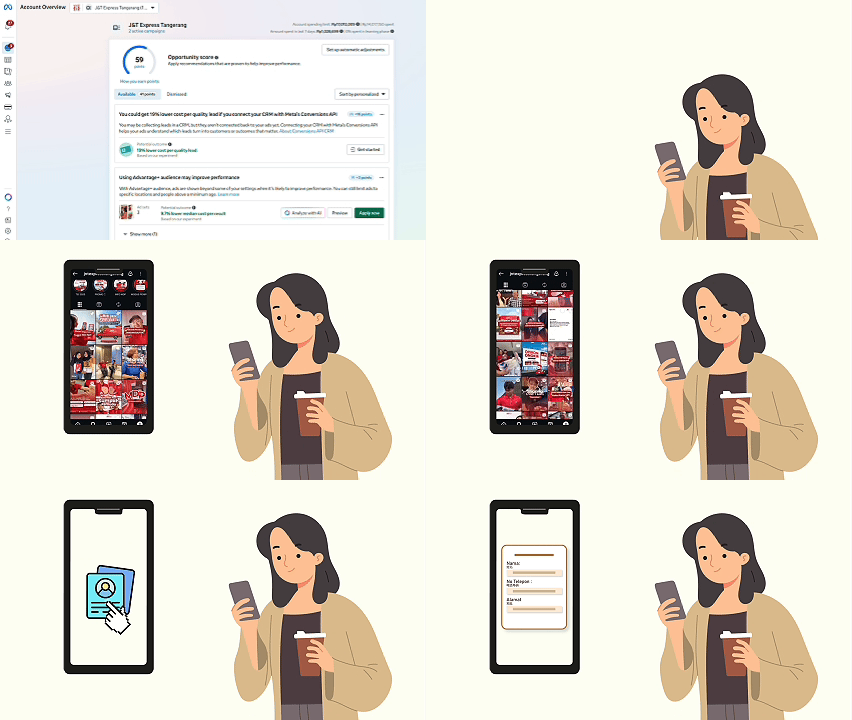
Structured high-intent traffic ingestion layer
High-intent traffic ingestion and structured data capture layer.

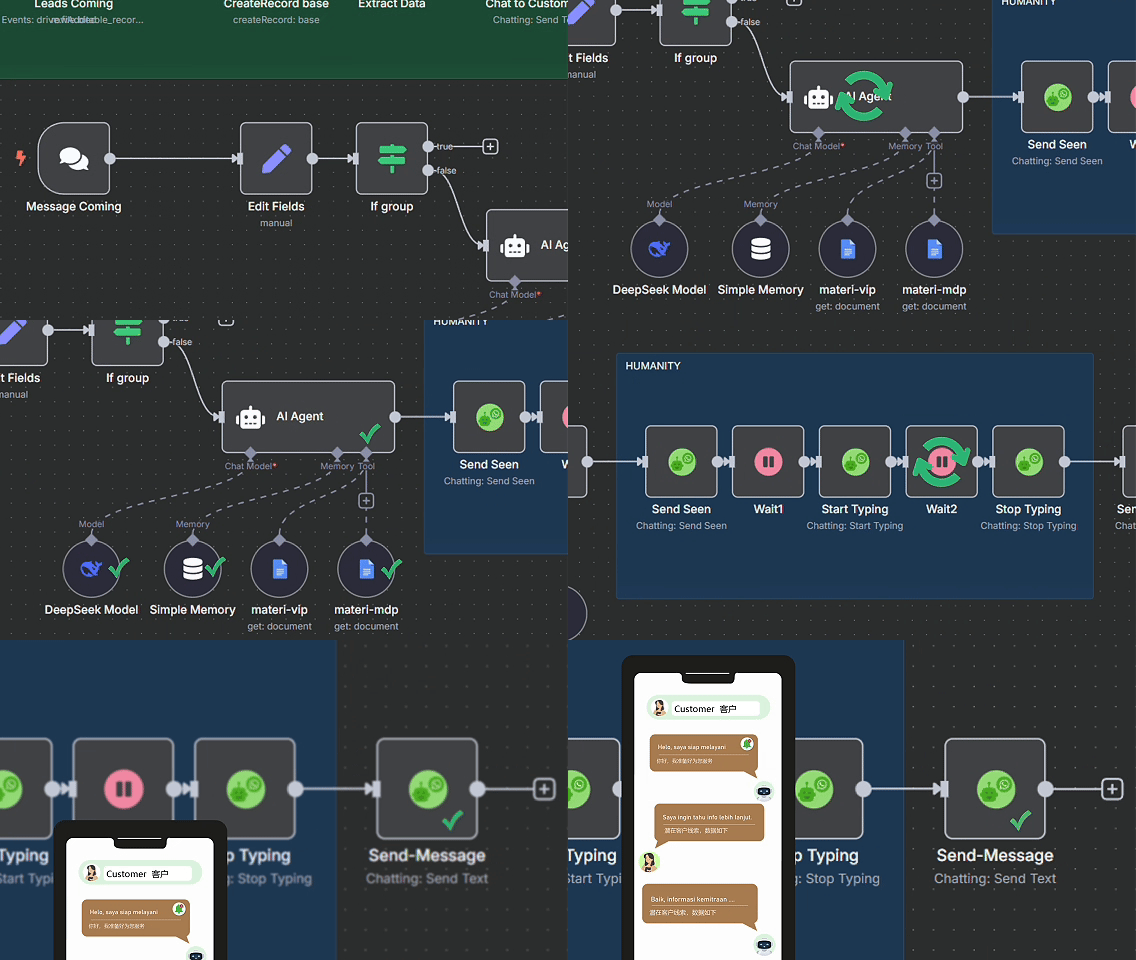
Event-driven automation orchestration layer
Event-driven orchestration that automates lead routing and workflow execution.

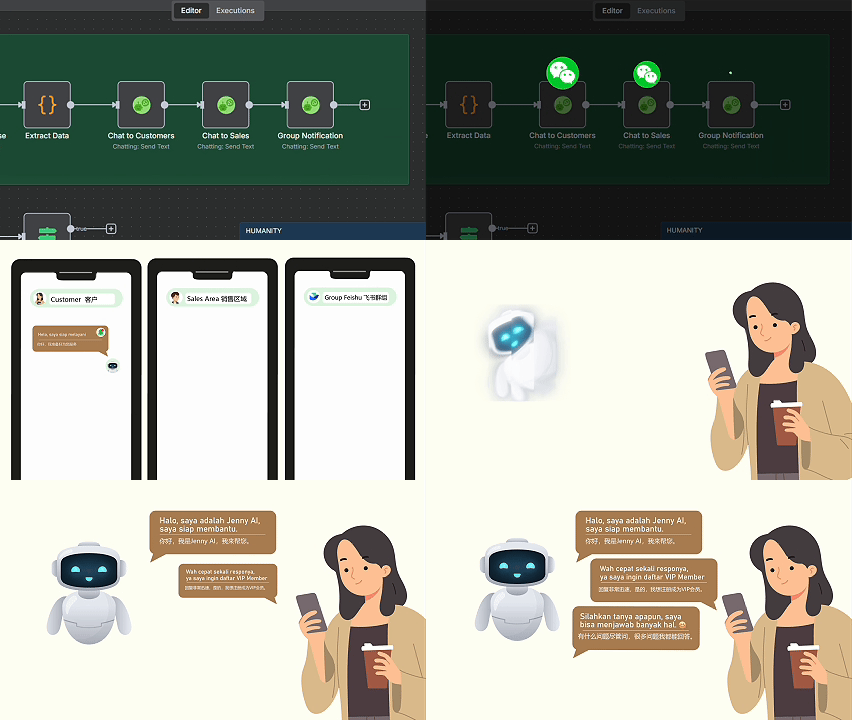
Conversational AI Response Layer
Instant autonomous response with 24/7 system uptime.


AI Qualification & Intent Scoring Engine
AI-powered qualification and predictive intent scoring engine.

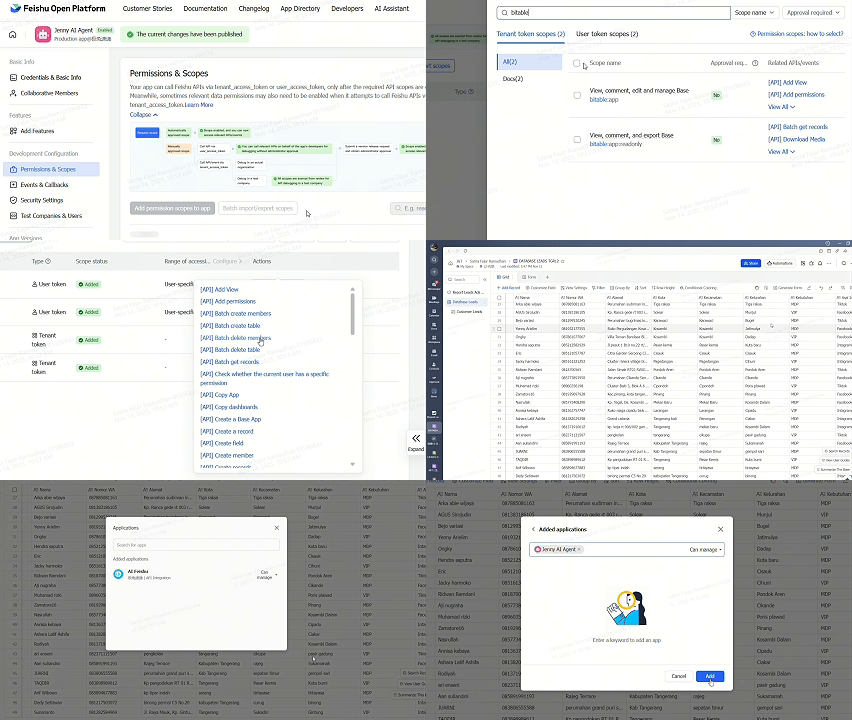
Centralized Data Infrastructure
Centralized CRM infrastructure for structured data and automation control.


Performance Intelligence Layer
Real-time performance intelligence and automated reporting distribution.
Operational Architecture Constraints

Manual Workflow Dependency
Manual lead processing created execution bottlenecks and inefficient resource utilization.

Response Latency Across Channels
Channel response latency degraded conversion efficiency due to offline sales prioritization.

Unstructured Lead Volume
High daily lead inflow lacked automated routing logic and prioritization rules, leading to inconsistent follow-up execution and opportunity leakage.

Limited Performance Visibility
Monthly reporting cycles limited real-time performance visibility and delayed data-driven decision-making.

Fragmented Data Infrastructure
Absence of centralized CRM architecture led to inconsistent records, duplicate entries, and data input errors.

Escalating Operational Costs
Growing inquiry volume required additional administrative headcount, increasing operational overhead without proportional efficiency gains.
Automation Architecture Deployment
A structured automation architecture was deployed to centralize lead processing, enforce execution logic, and optimize performance feedback loops.
-
Conversational AI Layer
Deployed a 24/7 AI-powered WhatsApp agent to ensure sub-minute response time and automated lead pre-qualification. -
Event-Driven Orchestration Layer
Integrated workflow automation with centralized CRM to eliminate manual routing and enforce structured lead assignment. -
Performance Intelligence Layer
Implemented real-time dashboards and automated reporting pipelines to replace delayed monthly analytics cycles. -
Execution Re-Architecture
Redesigned the sales operating model, isolating qualification and routing within the automation layer to allow sales teams to focus exclusively on closing.
System Project Demonstration

A real-time system simulation demonstrating automated ingestion, qualification logic, routing orchestration, and CRM synchronization.
Performance Impact Summary

AFTER
METRIC
BEFORE
47% increase in qualified lead rate
35% reduction in operational overhead
Baseline conversion rate
Average Response Time
2–3 hours
<1 second (95%+ reduction)
Qualified Lead Ratio
Real-time performance dashboard with automated daily updates
Continuous manual administrative support
Operational Cost
Reporting Visibility
Monthly reporting cycles
Data Integrity
Centralized, schema-controlled CRM data architecture
Automated, rule-based follow-up execution
Lead Follow-Up Execution
Manual and inconsistent
Manual data inconsistencies and entry errors

Recognition & Achievements
This system received international recognition at the 2025 Global Feishu Efficiency MVP AI+ Innovation Contest. Among 134 AI-driven cases submitted across multiple countries, the project advanced to the finals and secured 3rd place globally. It was recognized for transforming AI from experimentation into a scalable, production-grade automation infrastructure delivering measurable operational efficiency.

Best Automation System Architecture

Global Performance Excellence Recognition 2025

MVP of
Efficiency 2026
Professional Credentials & Media Coverage

Certified in enterprise automation architecture and internationally recognized for deploying scalable AI-driven performance systems within real operational environments.

Featured for representing Indonesia in global AI innovation competition.
Architecture Adaptability
While initially deployed for lead management and advertising performance optimization, this automation architecture is not limited to marketing use cases.
The core system design — structured data ingestion, rule-based qualification logic, event-driven routing, and centralized performance intelligence — enables deployment across multiple industries.
This framework can be adapted for:
1. Customer Service Automation
Real-time ticket intake, priority classification, SLA monitoring, and escalation routing.
2. Online Healthcare Operations
Patient inquiry triage, appointment scheduling automation, response time compliance tracking, and structured case documentation.
3. Education & Enrollment Systems
Prospective student qualification, automated follow-up workflows, and centralized application tracking.
4. Enterprise Internal Operations
Request management, task orchestration, and performance visibility across departments.
The architecture is designed to scale across operational environments where structured execution, response discipline, and data integrity directly determine performance outcomes.